Reviewing In My History Teacher Era SVG for Embroidery
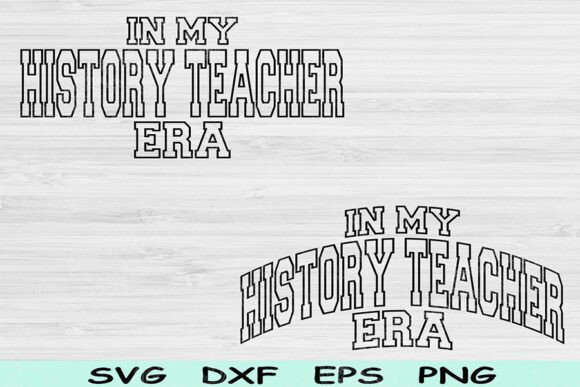
As a designer who spends half my life digitizing and the other half stitching, I have learned that not every digital embroidery file translates well from screen to fabric. When I first opened In My History Teacher Era Svg Dxf Png, my immediate reaction was one of cautious optimism. The phrase "In My History Teacher Era" taps into a popular cultural meme format, which is excellent for current market trends, but the real test lies in how those letters and shapes behave under the needle. For Etsy sellers and craft business owners, understanding the structural integrity of a design before you commit to a full production run is crucial. This review breaks down how this specific graphic performs in real-world applications, focusing on practicality rather than just aesthetics.
First Impressions: Mood and Visual Personality
The design carries a playful yet professional tone, perfectly suited for educators who want to express their passion without being overly formal. Visually, the layout appears balanced, with a clear hierarchy between the text elements. For a machine embroidery design, clarity is king. If the fonts are too thin or the spacing too tight, you risk thread breaks and poor readability. From a designer’s perspective, this graphic seems to rely on bold, clean lines, which is a positive sign for stitchability. It avoids the trap of excessive detail that often plagues complex graphics intended for print but unsuitable for thread. The mood is approachable, making it an ideal candidate for personalized gifts or staff appreciation items.
Real-World Application: The Sweatshirt Test
To truly evaluate In My History Teacher Era Svg Dxf Png, I imagined applying it to a mid-weight cotton blend sweatshirt. This is a staple product for any small shop product line. On a curved surface like a chest or sleeve, the design needs to hold its shape without puckering. Because the text is the primary focus, I would recommend using a combination of satin stitch for smaller accents and a light fill stitch for larger letter components if the digitization allows. However, since this is provided as an SVG/DXF/PNG package, many users will be converting these vectors into stitch files themselves or using auto-digitizing software. Here lies the first caution: auto-digitizing often creates excessive stitch density. Before stitching your final custom apparel, always run a simulation to ensure the thread count isn’t so high that it stiffens the fabric uncomfortably.
If you are selling this as a finished product, consider the placement carefully. Centered on the left chest, it serves as a subtle badge of pride. Across the back, it becomes a statement piece. For a tote bag design, the same principles apply, but you must account for the weave of the canvas. A heavier fabric can handle more dense stitching, but you still need a robust stabilizer to prevent distortion during the hooping process.
Navigating Fabric and Hoop Constraints
One of the most critical aspects of using In My History Teacher Era Svg Dxf Png is understanding where it might fail. Not all fabrics are created equal. If you attempt to stitch this on a thin, stretchy jersey tee without proper stabilization, the text will likely warp. I strongly advise using a cut-away stabilizer for knit fabrics to maintain the integrity of the letters over time and through multiple washes. For woven fabrics like linen or cotton twill, a tear-away stabilizer might suffice, but test it first.
Hoop size is another limiting factor. If you are working with a standard 4x4 inch hoop, you may need to scale the design down, which could compromise the legibility of smaller details. Always check the dimensions of the SVG before importing it into your embroidery software. If the design includes intricate serifs or small decorative elements, they may turn into messy clumps of thread if scaled too small. For embroidered patch creation, this design works well because patches allow for higher density and stiffer backing, giving the text a crisp, raised appearance that looks premium.
Color Theory and Thread Selection
The visual appeal of this design relies heavily on contrast. Since it is a text-based graphic, the choice of thread colors will define its success. For a classic academic look, consider deep navy or burgundy threads on a cream or heather gray fabric. For a more modern, vibrant take, bright teal or mustard yellow can pop against dark denim. Avoid low-contrast combinations, such as light gray on white, as the texture of the stitch may get lost, making the message hard to read from a distance. Remember, in commercial embroidery, readability equals value. If a customer has to squint to read "History Teacher," the perceived quality of the handmade product drops.
Commercial Viability and Licensing Considerations
For digital product sellers and crafters, the versatility of having SVG, DXF, and PNG formats is a significant advantage. The SVG and DXF files allow for precise scaling and editing in vector software before digitizing, while the PNG is useful for creating printable mockup images for your online store listings. However, a crucial step often overlooked is licensing. The product description states these are digital artwork files, but it does not explicitly detail commercial rights for the stitched output. Before listing holiday embroidery items or baby embroidery pieces featuring this design on Etsy, confirm whether the creator grants a commercial license for physical goods. Using design assets without proper clearance can lead to intellectual property issues.
Additionally, consider your target audience. This design fits seamlessly into the Crafts category, appealing to teachers, history buffs, and students. It is particularly strong for end-of-year gifts, teacher appreciation week, or back-to-school promotions. By positioning it as a niche-specific item, you increase its perceived value compared to generic teacher quotes.
Practical Designer Notes for Best Results
To ensure your embroidery project succeeds, follow these practical steps when working with In My History Teacher Era Svg Dxf Png:
- Test on Scrap Fabric: Never stitch directly on your final garment. Use a similar fabric scrap to test tension and density.
- Check Stitch Density: If you are digitizing the SVG yourself, reduce the density for large fill areas to prevent fabric puckering.
- Inspect Small Details: Zoom in on the vector file. Are there tiny anchor points or overlapping paths that could cause needle jumps? Clean up the vector before digitizing.
- Contrast Check: View your design in black and white to ensure the shape is recognizable without color reliance.
- Stabilizer Choice: Match your stabilizer to your fabric weight. When in doubt, go stronger.
- Verify Licensing: Confirm if the file allows for commercial use of finished physical items.
In conclusion, In My History Teacher Era Svg Dxf Png offers a trendy, relevant design that, when handled with technical care, can elevate a simple garment into a cherished keepsake. It requires thoughtful execution regarding fabric choice, stabilization, and thread selection, but the potential for high-quality custom apparel and gifts is significant. For the experienced maker, it is a solid addition to your library of graphics, provided you respect the technical limits of embroidery machinery.