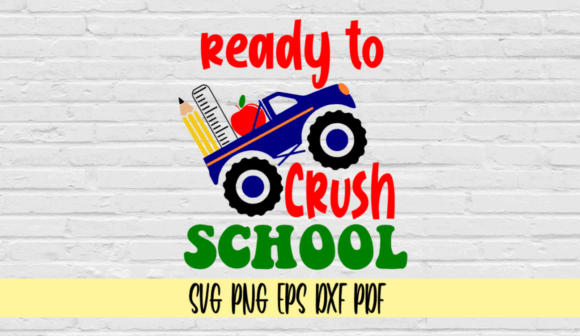
Review: Ready to Crush School Design for Embroidery
As a designer who spends more time staring at stitch maps than actual fabric, I have learned that not every graphic translates well into thread. When I first pulled up the Ready to Crush School file set, my initial reaction was cautious optimism. The concept—a feisty monster truck themed around the new school year—is undeniably catchy. It taps into that specific, high-energy niche of back-to-school excitement that parents and kids love. But as embroidery professionals, we know that cute concepts can quickly turn into stitching nightmares if the underlying design assets aren’t structured correctly for the hoop.
I approached this review with a practical mindset. I wasn’t just looking at the PNG or SVG preview; I was thinking about how this machine embroidery design would behave on a real finished product. Would it pull? Would the details get lost? Is it viable for a craft business looking to expand its autumn catalog? Here is my breakdown of using Ready to Crush School in actual production scenarios.
First Impressions and Visual Personality
The mood of Ready to Crush School is bold and playful. The monster truck motif suggests motion and energy, which is perfect for capturing the attention of younger demographics. From a layout perspective, the design feels balanced, though it leans heavily on strong outlines and likely requires careful management of stitch density to avoid becoming a stiff patch of thread on soft fabric.
For an Etsy seller or small shop owner, visual appeal is half the battle. This design has high recognition value. It doesn’t need much explanation. When placed on a tote bag design or a sweatshirt embroidery project, it communicates its message instantly. However, because it relies on a specific theme, its shelf life is seasonal. You are working within the August to October window for maximum impact, so your production planning needs to be tight.
Real-World Application: The Custom Tote Test
To test the viability of this embroidery file, I mentally simulated a common handmade product: a canvas tote bag for a kindergarten student. Canvas is forgiving, but it has a distinct fabric texture that can interfere with fine details. If Ready to Crush School includes tiny lettering or intricate wheel spokes, these areas are at risk of sinking into the weave.
In this scenario, the success of the project hinges on your choice of stabilizer. A cut-away stabilizer would be non-negotiable here to support the weight of the truck graphic. If you attempt this on a thinner material without proper backing, the fill stitch areas might pucker, ruining the clean lines of the monster truck. For a personalized gift, this level of finish is what separates a amateur hobbyist from a professional brand. Customers pay for durability and clarity, not just the image itself.
Apparel and Wearables
Moving beyond totes, let’s consider custom apparel. A hoodie or sweatshirt is a natural home for this design. The heavier fabric supports the weight of the stitches better than a standard t-shirt. However, if you are aiming for baby embroidery on a onesie, proceed with caution. Baby skin is sensitive, and dense embroidery can feel scratchy or heavy. If you use this on infant wear, consider scaling it down significantly or using an applique design technique where fabric fills the main body of the truck, reducing the stitch count and improving comfort.
For caps and hats, the curved surface presents a challenge. Monster trucks are wide designs. If the hoop size is limited, you may need to crop or simplify the graphic. Always check the width against your cap frame before committing. A distorted truck looks unprofessional and can lead to refunds or negative reviews in your small shop product lineup.
Technical Considerations for Stitching
When working with any digital embroidery file, especially one sourced as a graphic set including SVG, PNG, DXF, and PDF, you must verify the stitch data. The description mentions these formats, which suggests versatility for cutting machines and printers, but for embroidery, you need the specific DST, PES, or EXP files compatible with your machine. Never assume a vector file converts perfectly to stitches without manual editing.
Pay close attention to thread colors. The monster truck theme likely calls for vibrant, contrasting hues. Test your color palette on both light and dark fabrics. A design that pops on white cotton might disappear on navy blue if the outline isn’t thick enough. I recommend running a test on scrap fabric first. Check for thread breaks in tight corners and ensure the running stitch underlays are sufficient to anchor the design.
Another critical factor is washing. School items get dirty. They go through the wash repeatedly. If the stitch density is too low, the design may fray after ten cycles. If it is too high, the fabric may tear. Finding this balance is part of the job. For commercial embroidery projects, durability is a key selling point. Mentioning that your products are tested for washability can boost customer trust and justify a higher price point.
Strategic Use for Business Growth
For creative entrepreneurs, Ready to Crush School is more than just a cute image; it is a tool for engagement. Use it to create bundles. Pair the embroidered item with a matching printable mockup for social media promotion. Show the design in action on various products—backpacks, lunch boxes, pencil cases. This helps buyers visualize the end result and increases the perceived value of your design assets.
However, be mindful of licensing. The product description lists it under Crafts and Graphics, but you must confirm whether the license allows for commercial use of finished items. Some designers allow you to sell physical products but prohibit reselling the digital file itself. Always read the terms clearly to protect your business.
Where to Exercise Caution
- Small Hoop Sizes: Do not force this design into a 4x4 hoop if it was intended for 5x7 or larger. Resizing too small will merge details and create a muddy appearance.
- Stretchy Fabrics: Avoid using this on thin jersey knits without heavy stabilization. The weight of the truck graphic will cause the garment to sag.
- Tiny Lettering: If the design includes text like "School" or "Crush," inspect it closely. Small serif fonts often fail in embroidery. Sans-serif, bold letters perform better.
- Dark Fabrics: Ensure there is a proper underlay or background fill if the design elements do not naturally cover the fabric color.
Final Verdict for Makers
Ready to Crush School is a strong contender for your fall collection if handled with technical precision. It offers high visual impact and fits neatly into the lucrative back-to-school market. For the experienced designer, it provides a fun challenge in balancing detail with stitch efficiency. For the beginner, it serves as a reminder that preparation—testing, stabilizing, and color matching—is just as important as the design itself.
By treating this embroidery project with respect for the medium, you can create holiday embroidery gifts and embroidered patch products that stand out in a crowded marketplace. Keep your eyes on the details, respect the fabric, and let the monster truck do the talking. Your customers will appreciate the quality, and your brand will benefit from the professionalism.